Cellulite affects up to 90% of women at some point in their lives—yet it's surrounded by myths and marketed "miracle cures" that rarely deliver. This guide cuts through the hype to explain what cellulite actually is, what influences its appearance, and which treatments have genuine evidence.
What Is Cellulite?
Cellulite is the dimpled, "cottage cheese" or "orange peel" appearance of skin, most commonly on thighs, buttocks, and abdomen. It's NOT a disease—it's a normal variation in how fat is stored beneath the skin.
The Anatomy of Cellulite
Cellulite occurs due to the structure of subcutaneous fat and connective tissue:
- Fat cells are stored in compartments beneath the skin
- Fibrous bands (septae) connect skin to deeper tissue, creating these compartments
- When fat cells expand, they push up against the skin
- The fibrous bands pull down, creating dimpling
- The skin's surface becomes uneven—the characteristic cellulite appearance
Why Women Get Cellulite More Than Men
Anatomical differences explain why cellulite primarily affects women:
- Fibrous band orientation: Women's bands run vertically (creating dimples when fat pushes through); men's bands cross diagonally (better containing fat)
- Fat distribution: Women store more fat in cellulite-prone areas
- Skin thickness: Women's skin tends to be thinner, making underlying texture more visible
- Hormones: Estrogen influences fat storage and connective tissue structure
Factors That Influence Cellulite
You Cannot Control:
- Genetics: The primary determinant—some women are simply predisposed
- Gender: Female anatomy makes cellulite more likely
- Age: Skin thins and connective tissue weakens over time
- Hormones: Estrogen affects fat storage and tissue structure
You Can Influence:
- Body fat percentage: Lower fat means less pushing against skin
- Muscle tone: More muscle creates a smoother foundation
- Circulation: Poor circulation may worsen appearance
- Skin health: Hydrated, well-nourished skin shows less texture
- Hydration: Dehydrated skin shows cellulite more prominently
What Doesn't Work (Despite Marketing)
Let's address popular treatments with little evidence:
Myth: Cellulite Is "Toxins"
Cellulite is NOT accumulated toxins that can be "detoxed" or "flushed." This is marketing fiction. Cellulite is simply fat cells pushing against skin—the same fat cells found everywhere in your body.
Myth: Losing Weight Eliminates Cellulite
Weight loss can reduce cellulite appearance (less fat pushing up) but rarely eliminates it. Thin people have cellulite too—it's about structure, not just amount of fat. In some cases, weight loss with loose skin can make cellulite more visible.
Myth: Exercise Cures Cellulite
Exercise helps (muscle tone and fat reduction) but doesn't cure cellulite. Very fit athletes can still have cellulite due to genetic structural factors.
What Actually Helps
Topical Treatments
Realistic expectation: Topical products can temporarily improve appearance but cannot permanently restructure tissue.
Caffeine
Evidence Level: Moderate
Caffeine temporarily tightens skin by drawing out water and may stimulate circulation. Effects are real but temporary—lasting hours, not days. Best used before events when you want skin to look smoother.
Retinoids
Evidence Level: Moderate
Can thicken skin over time (making underlying texture less visible) and improve overall skin quality. Requires consistent long-term use. Prescription-strength retinoids show better results.
Botanical Extracts (Ivy, Horsetail)
Evidence Level: Weak to Moderate
Some evidence for improving microcirculation and skin firmness. Often combined with caffeine for synergistic effects.
Peptides
Evidence Level: Emerging
May support collagen production and skin firmness. More research needed specifically for cellulite.
Product Recommendation
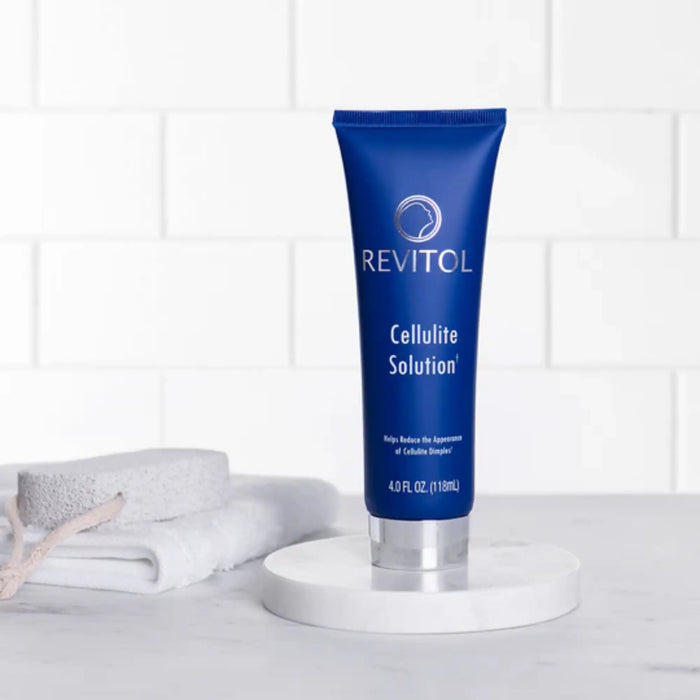
Revitol Cellulite Solution combines caffeine, botanical extracts, and skin-firming ingredients for temporary appearance improvement. Used consistently, it can help minimize the appearance of cellulite, though expectations should be realistic.
Professional Treatments
For more significant results:
Subcision (Cellfina)
Evidence Level: Strong
Physically cuts the fibrous bands causing dimpling. FDA-cleared with proven results lasting 3+ years. Most effective for individual dimples.
Radiofrequency Treatments
Evidence Level: Moderate
Heats tissue to tighten skin and stimulate collagen. Multiple sessions required. Results are modest; maintenance needed.
Laser Treatments
Evidence Level: Moderate
Various devices target tissue heating or fat reduction. Results vary; multiple sessions and maintenance typically needed.
Lifestyle Factors
- Strength training: Builds muscle that creates smoother foundation under skin
- Moderate body fat: Less fat pushing against skin
- Hydration: Well-hydrated skin shows less texture
- Dry brushing: May temporarily improve circulation and appearance (limited evidence, but low-risk)
Realistic Expectations
Let's be honest about what's achievable:
Topical Products
- Can temporarily improve appearance (hours)
- With consistent use, may modestly reduce visibility
- Will NOT eliminate cellulite
- Work best as part of comprehensive approach
Lifestyle Changes
- Can reduce appearance by 10-30%
- More effective than any cream alone
- Combined with topicals produces best results
Professional Treatments
- Can produce more significant improvement
- Results vary by treatment and individual
- Often require maintenance
- Most expensive option
Conclusion
Cellulite is normal and affects the vast majority of women. While no treatment eliminates cellulite completely, consistent effort with topical products like Revitol Cellulite Solution, combined with strength training and healthy body composition, can meaningfully improve appearance.
Accept that some cellulite is likely permanent (it's your anatomy), focus on controllable factors, and use products with realistic expectations. You're not broken—you're normal. The goal is improvement, not perfection.