The skin around your eyes is 40% thinner than the rest of your face and constantly moving—you blink over 10,000 times daily. No wonder it shows age first. This guide explains the science behind eye area concerns and which treatments actually work.
Understanding Eye Area Anatomy
The periorbital area (around the eyes) has unique characteristics:
- Extremely thin skin: Only 0.5mm vs. 2mm elsewhere on the face
- Few oil glands: Prone to dryness and dehydration
- Constant movement: Blinking, squinting, expressions cause dynamic wrinkles
- Delicate blood vessels: Close to surface, visible as dark circles
- Susceptible to fluid accumulation: Causes puffiness
- Muscle attachments: Contribute to crow's feet formation
The Three Main Eye Concerns
1. Dark Circles
Dark circles have multiple potential causes—understanding yours helps target treatment:
Vascular Dark Circles (Blue/Purple)
Caused by visible blood vessels through thin skin. Blood pools in the delicate capillaries under the eyes, and the thin skin allows this to show through. More common in those with naturally thin, fair skin.
Treatment focus: Ingredients that strengthen capillaries, improve circulation, and thicken the skin
Pigmented Dark Circles (Brown)
Excess melanin production under the eyes. Can be genetic (common in Mediterranean, Asian, and African skin tones) or caused by sun damage, inflammation, or rubbing the eyes.
Treatment focus: Gentle brightening ingredients that inhibit melanin production
Structural Dark Circles (Shadows)
Hollows or tear troughs create shadows that appear as dark circles. Often genetic and worsened by age-related volume loss. These respond less to topicals—fillers are often the most effective treatment.
Treatment focus: Plumping, hydrating ingredients; consider dermal fillers for significant hollows
Lifestyle-Related Dark Circles
Lack of sleep, dehydration, allergies, or excessive screen time can worsen all types of dark circles.
2. Puffiness (Under-Eye Bags)
Puffiness is typically caused by:
- Fluid retention: Salt intake, allergies, crying, lack of sleep
- Fat pad herniation: Age-related weakening of the orbital septum allows fat to bulge forward
- Inflammation: Allergies, irritation, or eczema
- Genetics: Some families are prone to puffy eyes
Treatment focus: Caffeine and other vasoconstrictors reduce temporary puffiness. Chronic fat pad herniation may require surgical intervention.
3. Wrinkles (Crow's Feet & Fine Lines)
Eye wrinkles form from:
- Dynamic movement: Smiling, squinting create "crow's feet"
- Collagen loss: Age-related structural decline
- Dehydration: Thin skin shows dehydration-wrinkles first
- Sun damage: UV accelerates collagen breakdown
Treatment focus: Hydration, retinoids (carefully), peptides, and sun protection
Evidence-Based Eye Cream Ingredients
For Dark Circles
Niacinamide (Vitamin B3)
Evidence Level: Strong
Improves microcirculation, strengthens skin barrier, and brightens pigmentation. One of the most versatile ingredients for dark circles of any type. Non-irritating.
Vitamin C (Ascorbic Acid derivatives)
Evidence Level: Strong
Brightens pigmentation, supports collagen, and strengthens blood vessels. Use gentle derivatives (like Sodium Ascorbyl Phosphate) around eyes to avoid irritation.
Vitamin K
Evidence Level: Moderate
May help with vascular dark circles by supporting blood clotting and reducing leaky capillaries. Studies are limited but promising.
Arbutin
Evidence Level: Moderate
Natural tyrosinase inhibitor that fades pigmented dark circles without irritation.
For Puffiness
Caffeine
Evidence Level: Good
Vasoconstrictor that temporarily reduces puffiness by constricting blood vessels and reducing fluid accumulation. Effects are quick but temporary—best for morning de-puffing.
Peptides (Chrysin, N-Hydroxysuccinimide)
Evidence Level: Moderate
These peptides may help reduce the appearance of dark circles by addressing hemoglobin degradation products that contribute to discoloration.
Bisabolol (Chamomile)
Evidence Level: Moderate
Anti-inflammatory that soothes irritation and reduces inflammation-related puffiness. Also calming for sensitive eye areas.
For Wrinkles
Retinoids
Evidence Level: Extremely Strong
The gold standard for wrinkles everywhere, including eye area. However, use carefully—this skin is sensitive. Start with low concentrations (retinol 0.25%) and apply sparingly. Some eye creams use retinaldehyde or retinyl palmitate for gentler effects.
Peptides
Evidence Level: Good
Signal peptides (like Matrixyl) stimulate collagen production without irritation. Excellent for those who can't tolerate retinoids or want to use both.
Hyaluronic Acid
Evidence Level: Strong (for hydration)
Doesn't directly treat wrinkles but plumps dehydrated fine lines immediately. Multi-weight HA formulas (high and low molecular weight) provide both surface and deeper hydration.
How to Apply Eye Cream Properly
- Amount: Pea-sized amount for both eyes—too much can migrate and cause irritation
- Finger: Use your ring finger—it has the lightest touch
- Motion: Gently pat or tap, NEVER rub or drag
- Location: Apply along the orbital bone, not directly against the lash line
- Order: After serums, before moisturizer and sunscreen
- Consistency: Morning and night for best results
Product Recommendation
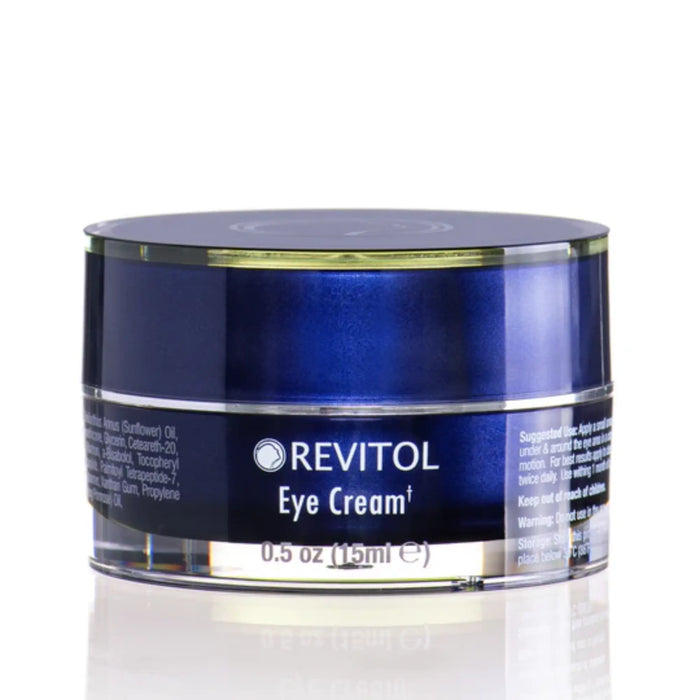
Revitol Eye Cream combines multiple evidence-based ingredients:
- Niacinamide for dark circles and barrier support
- Bisabolol for de-puffing and soothing
- Chrysin and N-Hydroxysuccinimide for pigmentation
- Hyaluronic acid for hydration
It's formulated specifically for the delicate eye area with a non-irritating, quick-absorbing texture.
Realistic Expectations
- Puffiness: Caffeine-based products work within minutes but effects are temporary
- Dark circles: Improvement takes 4-8 weeks of consistent use
- Fine lines: Noticeable improvement in 6-12 weeks with peptides/retinoids
- Deep wrinkles: Topicals have limited impact; consider professional treatments
- Genetic dark circles: Can be improved but rarely eliminated entirely
- Fat pad bags: Topicals cannot address structural issues; surgery may be needed
When Eye Cream Isn't Enough
Consider professional treatments for:
- Severe hollows: Dermal fillers (hyaluronic acid) can restore volume
- Fat pad herniation: Blepharoplasty (eyelid surgery) is the definitive treatment
- Deep crow's feet: Botox relaxes muscles that cause dynamic wrinkles
- Stubborn pigmentation: Chemical peels or laser treatment
Prevention Is Key
Protecting the eye area prevents future damage:
- Sunglasses: Protect from UV and reduce squinting
- Sunscreen: Use mineral SPF around eyes (less irritating)
- Gentle removal: Never tug when removing makeup
- Don't rub: Rubbing worsens pigmentation and stretches skin
- Sleep: Elevate head slightly to reduce morning puffiness
- Hydration: Stay well-hydrated; reduce sodium
Conclusion
The eye area requires special attention due to its unique anatomy. Understanding whether your concern is vascular, pigmented, structural, or wrinkle-based helps target treatment effectively. A good eye cream like Revitol Eye Cream addresses multiple concerns, but set realistic expectations—topicals work best for mild-to-moderate issues and as part of a comprehensive skincare routine.